Prof. Oren Shriki
At NeuroHelp, we're building EpiNess-a groundbreaking wearable device that detects and predicts epileptic seizures using EEG and AI. But an important question arises in designing any wearable EEG system: How many electrodes are enough to detect seizures accurately, and where should they be placed?
In our recent peer-reviewed study, published in Sensors (2023), we tackled this challenge head-on.
The motivation behind the research is clear: while traditional hospital-grade EEG setups use 19 or more electrodes, such systems are impractical for daily use. Most wearable solutions today use only a few electrodes-and often suffer in performance. We wanted to find the sweet spot between clinical performance and user comfort.
So we asked: Can we identify a smaller subset of electrodes that offers high detection accuracy across different patients and seizure types?
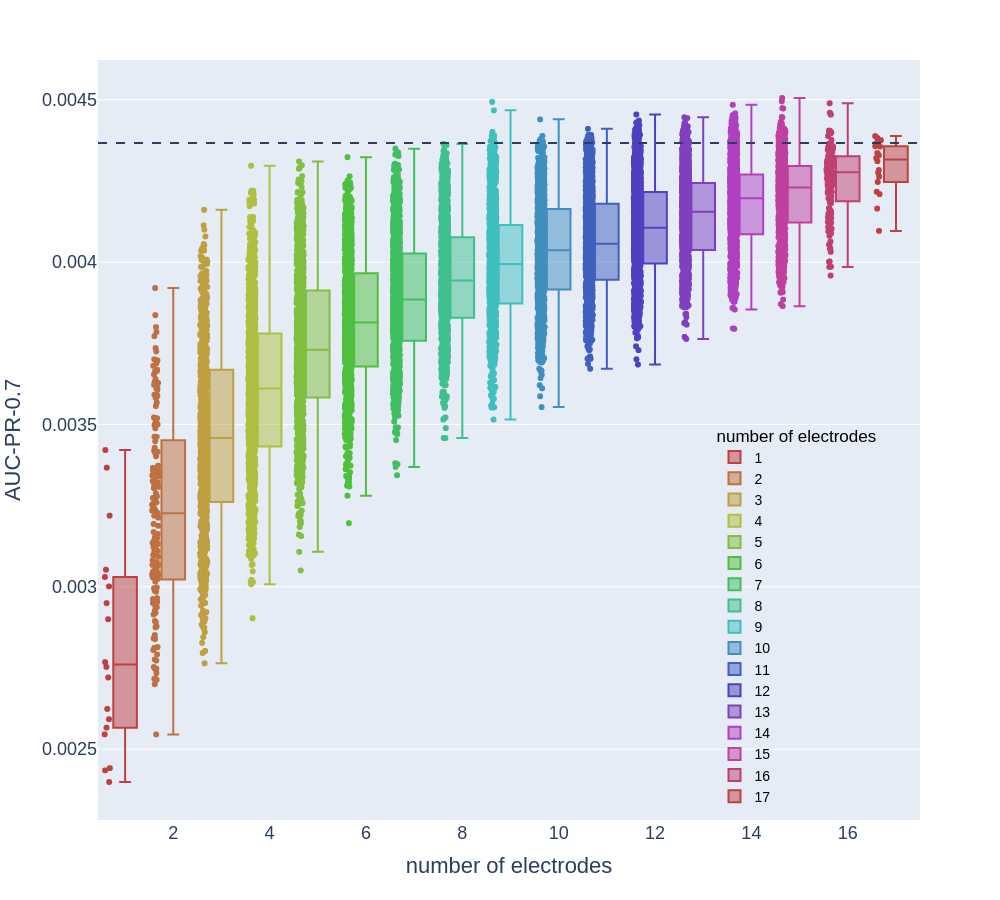
To find the answer, we used machine learning on a large dataset of EEG recordings from patients with epilepsy. We evaluated the performance of seizure detection models using various electrode combinations-ranging from a full 19-channel setup down to as few as 2 electrodes. Our goal was to simulate a real-world scenario, where we train a model on some patients and test it on unseen patients (i.e., patient-independent generalization).
The results were exciting:
We found that a carefully chosen subset of 8 electrodes provides nearly the same performance as the full clinical system-offering a realistic, comfortable configuration for a wearable device. This research guided the design of EpiNess, which features 8 dry EEG electrodes in clinically optimized locations-providing high-quality seizure detection while remaining lightweight and user-friendly.
At NeuroHelp, we believe patients shouldn't have to choose between accuracy and comfort. This study is a crucial step in bridging that gap-and bringing seizure detection and prediction into the real world.
Read the full paper here: Research Paper
Stay tuned as we continue translating this science into life-changing technology.